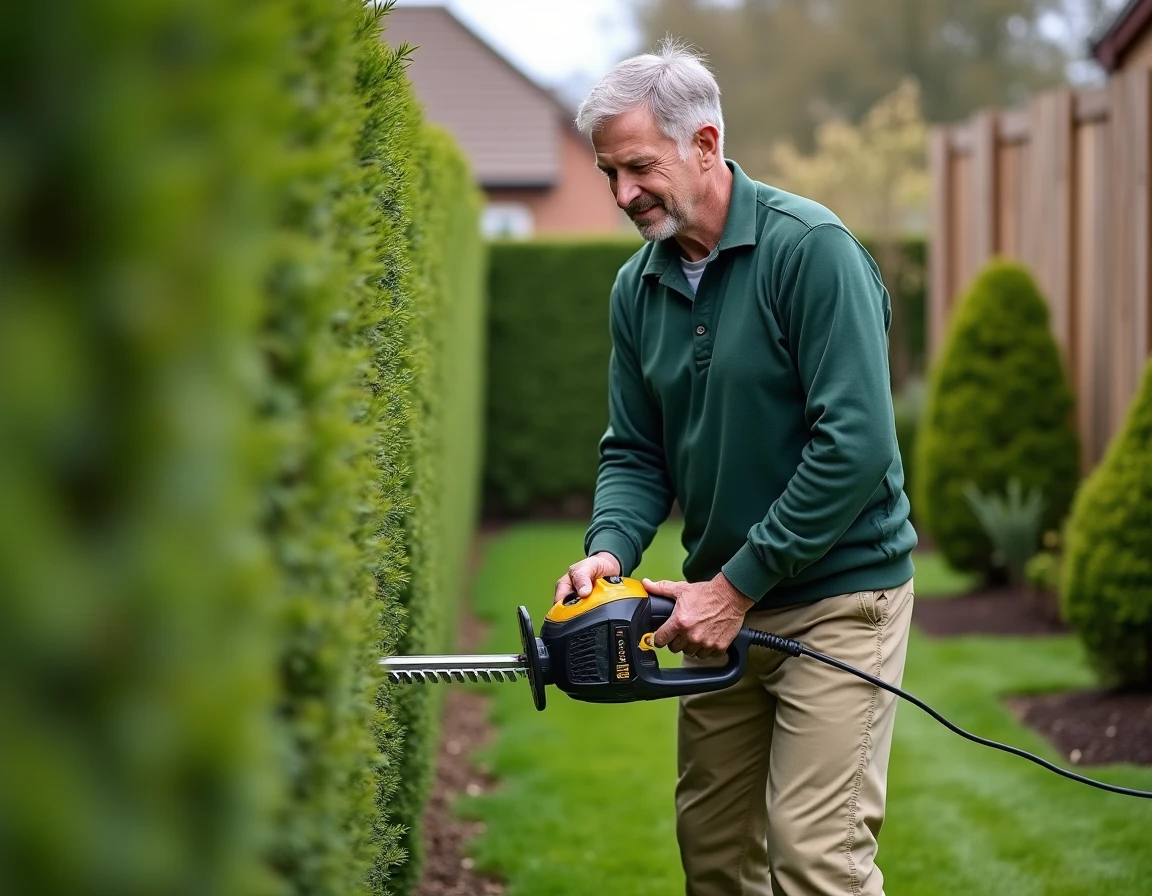
An electric hedge trimmer is a cutting tool equipped with two toothed blades powered by a mains or battery motor. Choosing a suitable model depends on three interrelated technical parameters: blade length, motor power, and the total weight of the device. Understanding how these parameters interact helps avoid purchasing mistakes and unnecessary pain after an hour of trimming.
Brushless motor and battery ecosystem: what has changed recently
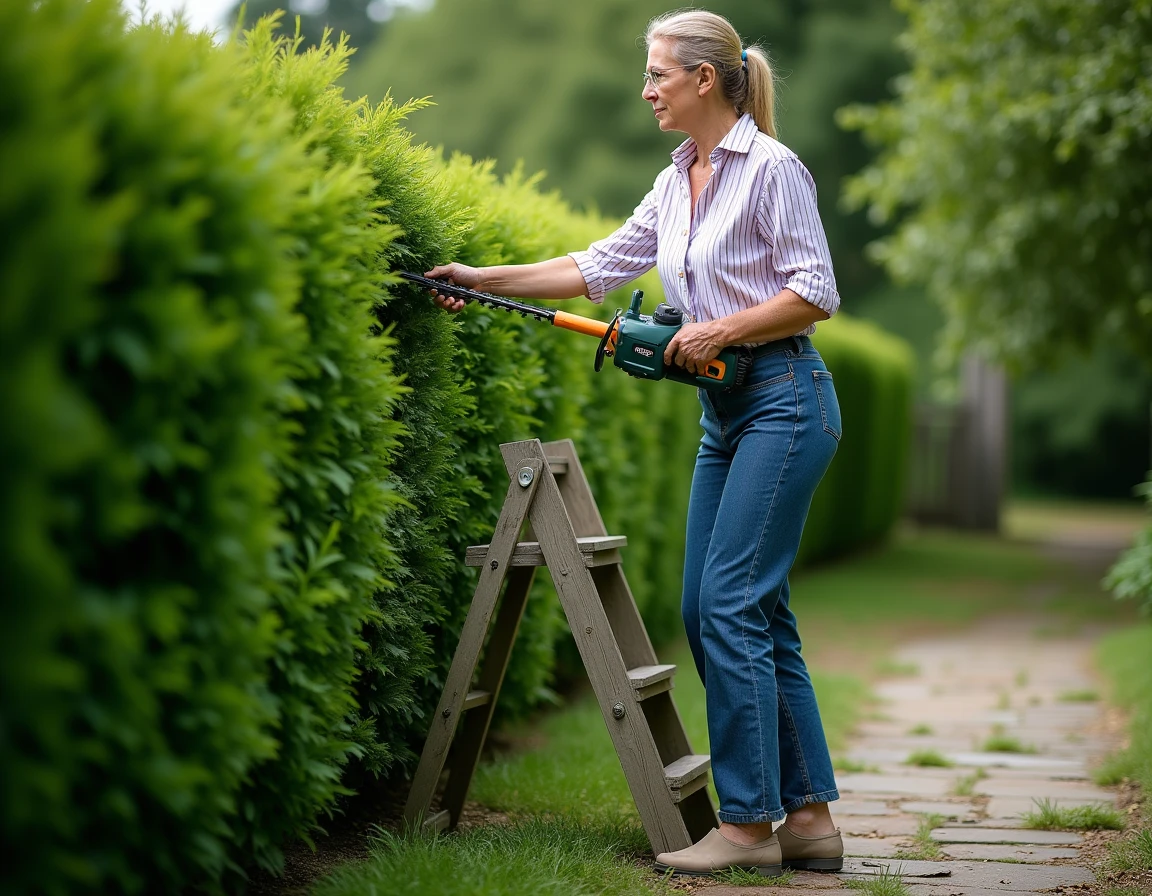
Wired electric hedge trimmers remain reliable for hedges located near a power outlet. Their limitation is known: the cord restricts the working area and requires constant vigilance to avoid cutting it.
In the cordless segment, the game has changed. Recent battery models feature brushless motors (without carbon brushes), which reduce energy losses due to friction and extend battery life compared to older universal motors. Several brands like Bosch, Stihl, Husqvarna, and Ryobi now offer battery platforms compatible across multiple tools: the same 18 V or 36 V battery powers drills, mowers, blowers, and hedge trimmers.
This multi-tool battery ecosystem changes the purchasing rationale. Before comparing models, check if you already own a compatible battery. Buying a hedge trimmer in the same range then becomes cheaper, as manufacturers often sell the tool without a battery or charger. Detailed comparisons are available on taille-haie-electrique.com, allowing you to filter by battery platform before making a decision.
Blade length and tooth spacing: adapting the cut to the hedge
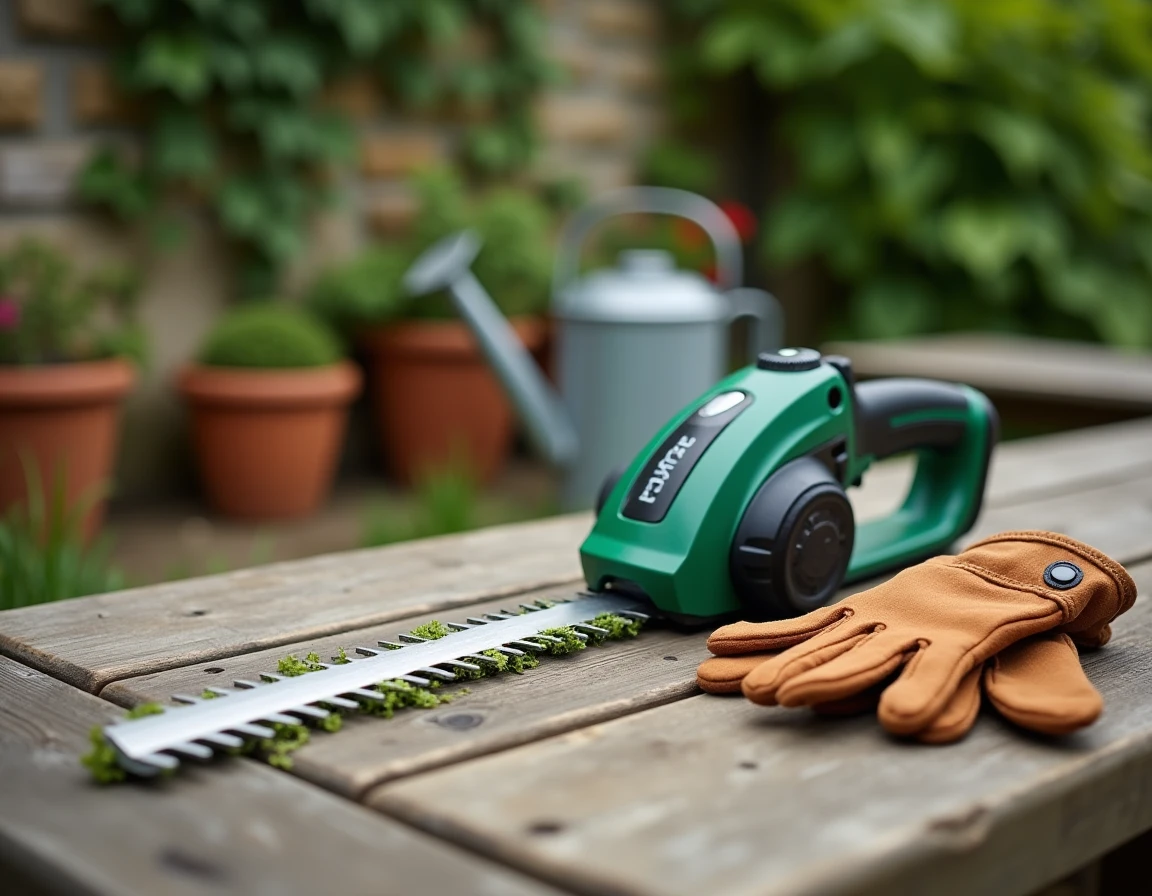
The blade length determines the cutting width in a single pass. A short blade is suitable for low and narrow hedges, while a longer blade reduces the number of back-and-forth movements on a tall or deep hedge.
The tooth spacing is the parameter that buyers most often overlook. It defines the maximum diameter of branches that the tool can cut cleanly. Too narrow spacing against thick branches causes jams and damages the blade. Too wide spacing on a fine hedge allows young shoots to pass through without being cut.
- Hedge of evergreen plants with fine foliage (privet, boxwood): a reduced spacing is sufficient and provides a clean cut.
- Wild hedge with semi-woody branches (laurel, photinia): a medium spacing prevents frequent jams.
- Old or mixed hedge with woody branches: prefer wide spacing and high motor power.
Looking only at the power in watts without checking the tooth spacing is like choosing a saw without considering the size of its teeth. Both data are listed on the technical sheet of each model.
Weight, vibrations, and musculoskeletal disorders
A hedge trimmer is held at arm’s length, sometimes above the head to reach the top of a hedge. The weight of the device then becomes a health criterion, not just a comfort one.
The INRS and several agricultural pension funds warn about the risk of musculoskeletal disorders related to vibrations and the weight of hedge trimmers. Shoulders, elbows, and wrists are the most stressed joints. This risk also concerns individuals who trim several times a year, not just landscape professionals.
Three elements reduce fatigue and joint strain:
- A total weight as low as possible, including the battery. The difference between two models can exceed one kilogram at comparable power.
- Soft-grip handles and an adjustable rear handle, which allow varying cutting positions without twisting the wrist.
- An integrated anti-vibration system, present on recent mid-range and high-end models, which dampens shocks transmitted to the hands.
Testing the grip in-store, with arms extended at shoulder height for about thirty seconds, gives a more realistic idea of comfort than simply reading a product sheet.
Wired or battery electric hedge trimmer: concrete selection criteria
The wired versus battery debate is resolved by asking two practical questions. The first: how far from the power outlet is the hedge? Beyond about twenty meters, the extension cord becomes heavy, cumbersome, and potentially dangerous on sloped terrain.
The second question concerns the duration of the trimming session. Recent battery models now match the power of older wired ones for regular maintenance, according to comparative tests published by UFC-Que Choisir. The battery life of a standard battery is generally sufficient for a medium-sized hedge. For a very long or dense hedge, having a second battery is simpler than managing fifty meters of cable.
The wired option retains an advantage in one respect: it never runs out of power. For a short hedge, close to the house, with brief trimming sessions, a lightweight and inexpensive wired model does the job without the hassle of recharging.
The noise issue in residential areas
Electric hedge trimmers, both wired and battery-operated, produce a sound level significantly lower than thermal models. In housing estates or condominiums with regulated gardening hours, this parameter weighs in the decision. Brushless motor models tend to be even quieter than those equipped with carbon motors.
Ultimately, the choice of an electric hedge trimmer hinges on the consistency between four elements: the type of hedge to maintain, the distance to the outlet, the battery platform already owned, and the user’s physical tolerance to weight. Neglecting any one of these criteria often leads to a tool that ends up at the back of the garage after two uses.