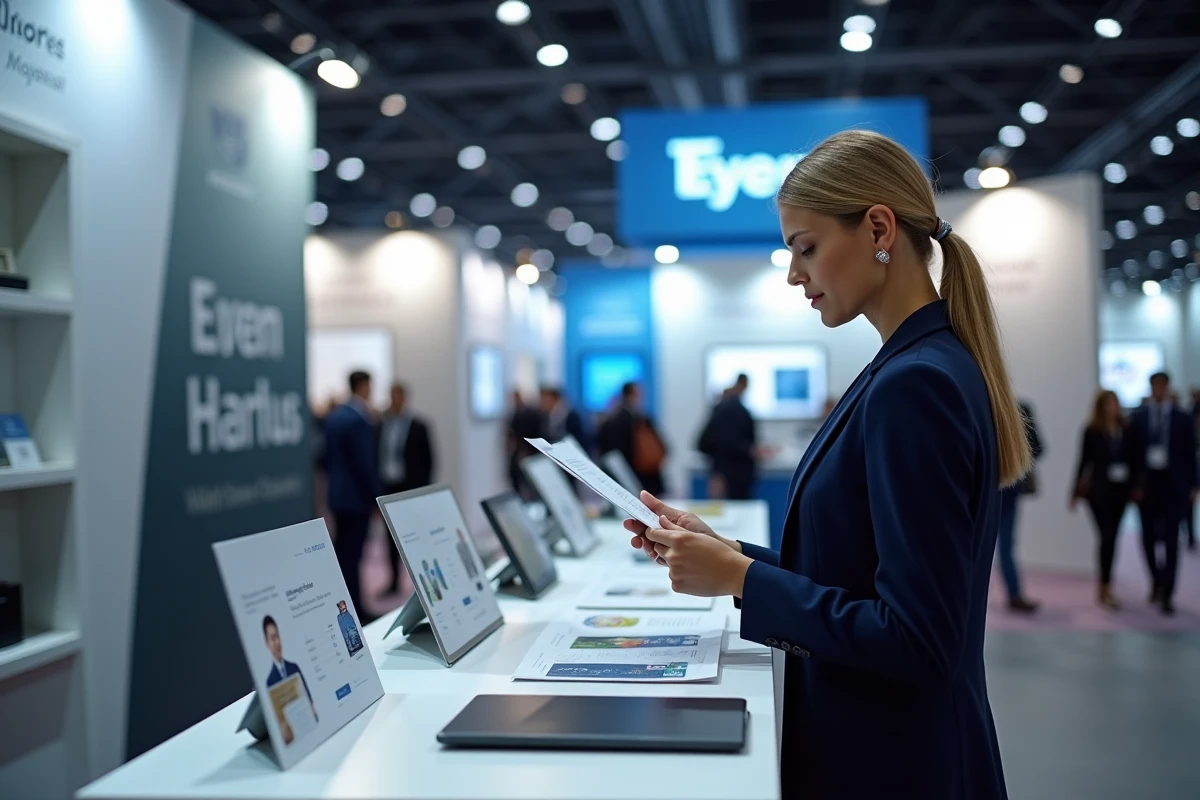
The market for temporary professional and private exhibitions is undergoing rapid transformation. Since early 2026, a European directive now regulates the sustainability of installations over 500 m², while hybrid formats (physical and virtual) are becoming widespread to reach international audiences. In this context, custom exhibition solutions are becoming a strategic lever for event organizers, whether it’s a corporate seminar, a trade show, or a private celebration.
EU Directive 2025/1234 and Constraints for Exhibition Organizers
Since March 2026, the EU Directive 2025/1234 on the sustainability of temporary exhibitions imposes mandatory audits on recyclable materials and waste management for any professional event exceeding 500 m² of exhibition space. This regulation, published in the Official Journal of the EU, changes the game for event planning agencies and technical service providers.
Specifically, each organizer must document the traceability of the materials used for stands and temporary structures. Feedback from the field varies on this point: some companies view these audits as a logistical hindrance, while others see them as an opportunity for differentiation among clients sensitive to CSR criteria.
For SMEs organizing recurring events, the additional cost of compliance pushes them to rethink formats. Specialized providers like those listed on ker-expo.fr offer structures designed from the outset to meet these requirements, incorporating certified materials and optimized dismantling processes.

Modular Exhibitions: Reducing Logistical Costs for Recurring Events
One of the most tangible changes in organizing custom events concerns the rise of removable modular solutions. According to a case study published by UNIMEV in April 2026, these systems allow for complete dismantling in 48 hours and reduce logistical costs by 25 to 30% compared to traditional stands.
This financial gain can be explained by several factors:
- The reuse of modules from one event to another, amortizing the initial investment over multiple operations (trade shows, conventions, corporate parties)
- The standardization of connections and fastenings, which decreases setup time and the need for specialized technical teams
- Optimized storage between two events, as modular elements are designed to stack or fold into reduced volumes
This approach particularly appeals to companies that participate in several trade shows each year in Paris, Lyon, Lille, or other major French cities. In contrast, for a unique event with high communication stakes, a fully customized stand is often preferred.
Hybrid Formats and 3D Virtual Exhibitions: What the Initial Feedback Shows
The “Event Industry Trends 2026” report by EventMB documents an increased adoption of immersive 3D platforms for professional exhibitions. The idea is to allow remote visitors to explore a trade show or private exhibition without traveling, via a digital twin of the physical space.
The available data does not yet allow for conclusions on the overall return on investment of these devices. Initial feedback shows a marked interest in expanding the international audience, but the conversion into sales leads remains lower than that of physical contact at a booth.
Private Events and Emotional ROI
The comparative analysis from the Events Observatory of the CCI Paris Île-de-France, dated February 2026, provides interesting insights. Custom solutions for private exhibitions outperform professional formats in participant loyalty, with an estimated gain of 40% in terms of emotional ROI. Conversely, they underperform by about 20% in lead generation compared to trade shows.
This observation drives some event agencies to propose mixed formats: a physical exhibition calibrated for commercial conversion, complemented by a digital component focused on loyalty and brand image. The choice between these two approaches directly depends on the project’s objective, whether it’s a product launch, team building, or a corporate evening.
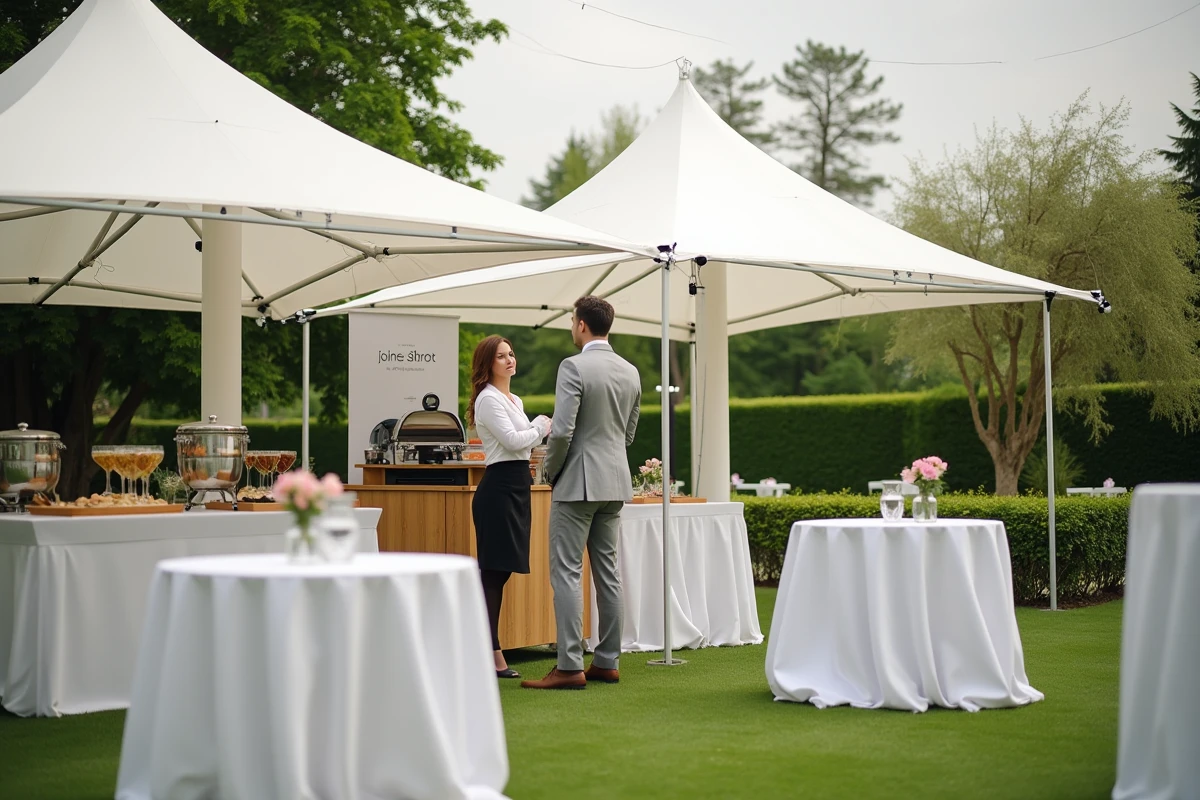
Criteria for Selecting a Custom Exhibition Provider
The event market includes hundreds of providers, from generalist agencies to specialists in exhibition scenography. A few technical criteria can effectively filter options:
- The ability to provide a compliance audit for the EU Directive 2025/1234, with documented traceability of the materials used
- Experience with reusable modular formats, verifiable through references from past events (conventions, residential seminars, sector-specific trade shows)
- Proficiency in 3D modeling tools to offer a realistic preview of the space before setup
- Comprehensive logistical management, from transport to dismantling, with commitments to timelines compatible with venue constraints
A provider who cannot clearly address regulatory compliance or who does not offer a preliminary technical site visit poses a risk for the organization. The specifications must include these points from the consultation phase.
The professional and private event sector is evolving under the dual pressure of environmental regulations and the digitization of exhibition formats. Organizers who anticipate these constraints by choosing compliant modular solutions and testing hybrid formats are better positioned for their upcoming event communication projects.