
The preparation for the B license in 2026 is based on a documentary foundation that most candidates underutilize. The PDF materials compiling verification questions, road safety sheets, and first aid do not only serve for cramming: they structure a revision focused on the three points scored separately during the practical test.
Evaluation Grid 2026: the criteria that PDFs must cover
The official grid used by inspectors is not limited to vehicle control. Since the Road Safety updates of 2024-2025, two areas have gained importance in the evaluation: eco-driving and driving flexibility (anticipation, gradual deceleration, limiting over-revving) and the relevant use of driving aids (cruise control, speed limiter, parking assistance, lane keeping).
A revision PDF that merely lists the 100 interior and exterior verification questions misses these criteria. We recommend ensuring that the material explicitly covers eco-responsible behaviors and the management of electronic aids, as the inspector assesses the candidate’s ability to use them without becoming dependent.
Among the resources that already integrate these developments, the driving license kit on Pulsion Laval gathers up-to-date questions for the 2026 exam in an offline usable format.
Technical Checks: beyond mere recitation
The questions asked during the practical exam focus on concrete manipulations: showing the headlight height adjustment control, opening the hood to locate the windshield washer reservoir, identifying the tire pressure warning light. A good PDF includes each question with the expected answer word for word, but also the associated gesture.
Reciting the answer without being able to physically show the element on the vehicle does not earn the point. During revision, we advise alternating between reading the PDF and checking on the training vehicle.
Geographical Disparities in B License Pass Rates
The department where you take the exam influences your chances of success. Data from the Ministry of the Interior shows a clear trend since 2024: waiting times are increasing in large metropolitan areas, while some rural departments show a better average pass rate, especially for candidates from accompanied driving.
This observation changes how one should plan their preparation. A candidate in a dense area will often have several months between the end of their training and the exam date. This dead period, if not used to maintain the level, leads to a degradation of reflexes.
Revising in PDF during the waiting period
The PDF format becomes particularly useful in this intermediate phase. Unlike an online application that requires an active subscription, a PDF file remains accessible without connection or additional costs. Three practical uses during the wait:
- Reviewing each week the road safety and first aid questions, which represent three easy points to secure on exam day
- Going over the sheets on priority rules and specific signs (memory of rare signs erodes quickly without practice)
- Annotating the document with mistakes made during the last driving lessons, to create a personalized revision tool
PDF Format vs Mobile App: which support for which revision
Platforms like Ornikar or PermisEcole offer mobile code series with adaptive artificial intelligence. Their strength lies in the automatic personalization of series based on past mistakes. For revising the highway code, this format remains superior to a static PDF.
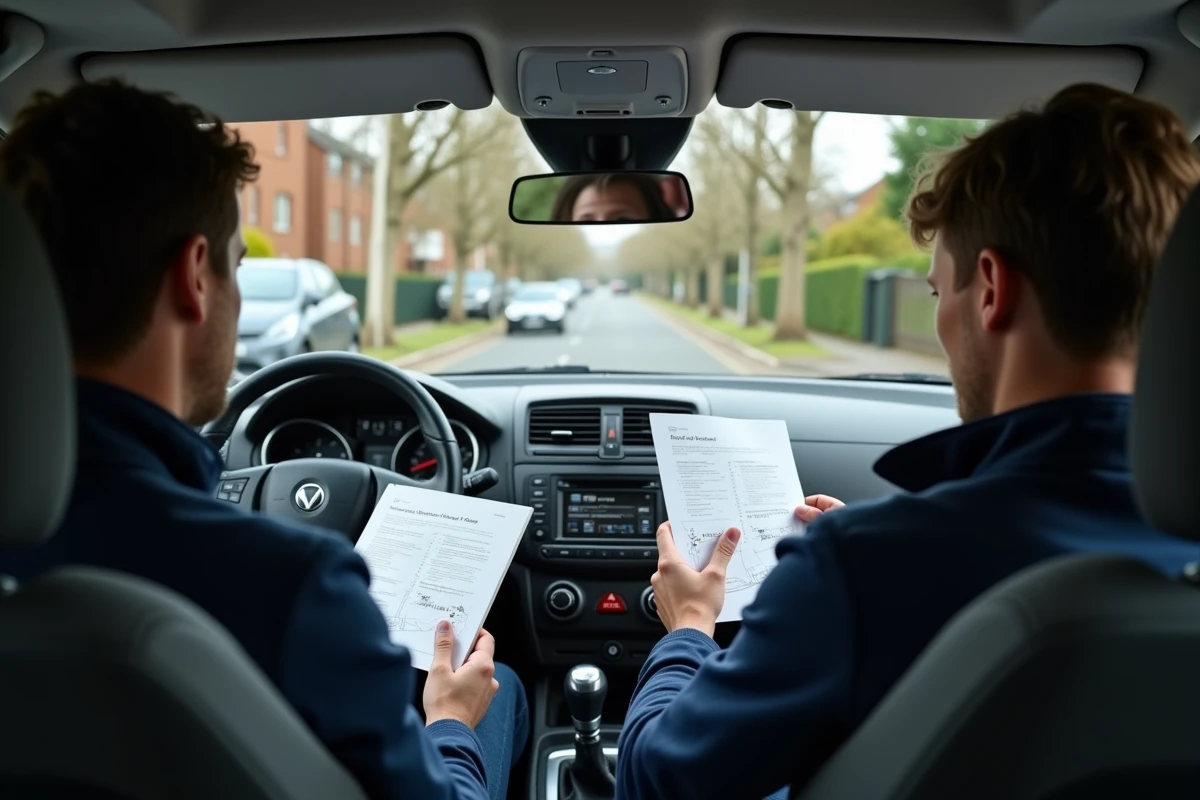
The PDF excels in another area: preparing for the practical test. Verification questions, first aid sheets, and self-assessment grids work better on a printable document that can be taken in the car or annotated with a pencil.
Combining both formats yields the best results. The code is practiced on an app (adaptive series, progress tracking). The practical exam is prepared using PDF (technical checks, road safety, vehicle control points).
What a Quality PDF Should Contain
Not all materials are equal. Before downloading a document, check for the presence of these elements:
- Up-to-date interior and exterior verification questions for the 2026 session (the reference framework evolves)
- Answers to first aid questions, with the expected gestures (protecting the danger zone, alerting, lateral safety position)
- A section on traffic rules and specific signage (speed limit signs in built-up areas, 30 zones, reserved lanes)
- Indications on the eco-driving criteria evaluated since 2024-2025

Accompanied Driving and PDF: an Underestimated Duo
Candidates in accompanied driving have a significantly higher pass rate than those in traditional training. The explanation lies in the volume of practice, but also in the quality of follow-up between educational appointments.
The AAC learning booklet complemented by a technical revision PDF covers both dimensions of the exam. The booklet tracks the kilometers and situations encountered. The PDF provides the theoretical foundation for checks and road safety.
Accompanying individuals with a structured support ask better questions during driving situations. Rather than limiting themselves to comments on parallel parking or hill starts, they can question the candidate about the meaning of a dashboard warning light or the procedure in case of an accident, just as the inspector would.
The choice of revision support deserves as much attention as the choice of driving school. An up-to-date PDF covering technical checks, first aid, eco-driving, and driving aids remains the most cost-effective complement to practical training for the 2026 license.