Successfully making a homemade cocktail relies less on the recipe than on three measurable variables: the ratio of the components, the temperature of the mixture, and the level of dilution. These are the parameters that a professional bartender adjusts for each drink, and they explain the difference in results between a bar cocktail and a rough attempt at home. This article compares practices that yield concrete results to those that contribute nothing, with supporting data.
Batching homemade cocktails: preparing in bottles like the pros
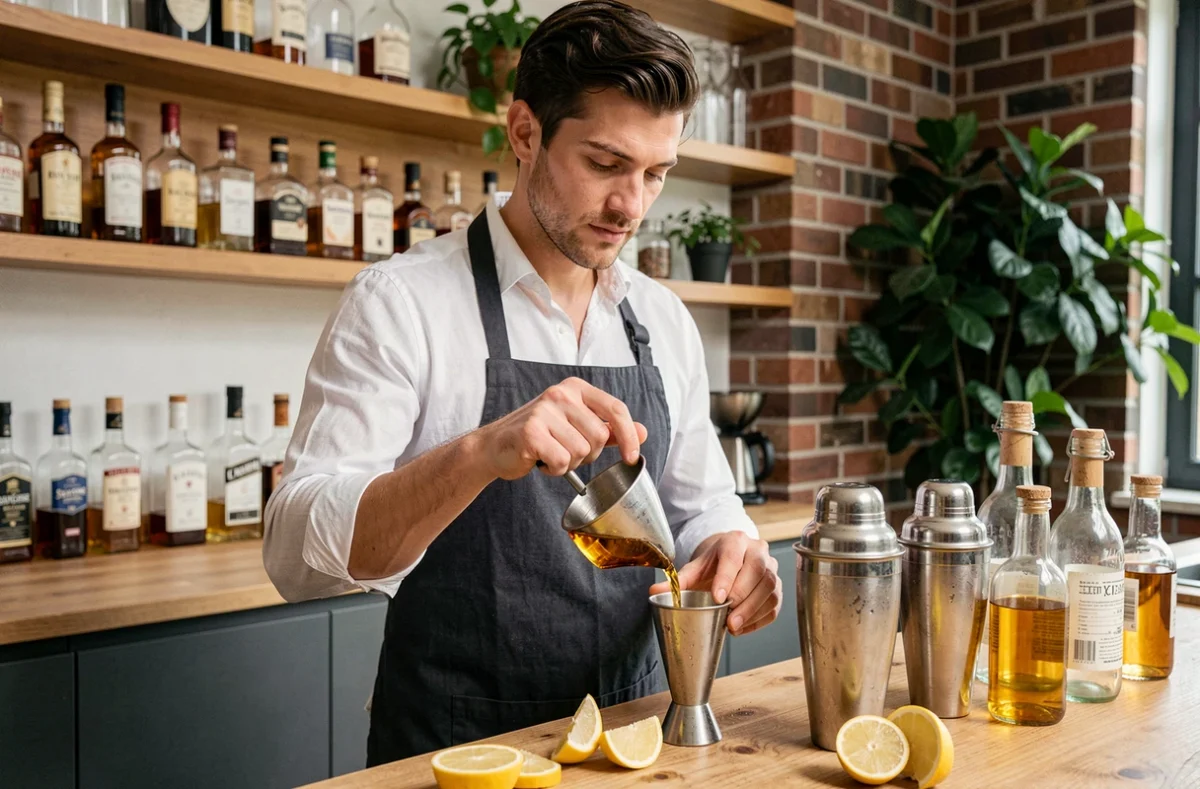
Most guides focus on minute preparation, drink by drink. However, cocktail bars use another method, batching, which involves pre-mixing the ingredients in a bottle ahead of time. This professional practice easily translates to home use and solves a concrete problem: the consistency of the dosage.
The principle is simple. Multiply the proportions of a recipe by the number of drinks desired, mix all the components except for the carbonated elements and ice, and then store the bottle in the refrigerator. When it’s time to serve, simply pour the dose into a glass with ice and add tonic or soda water if the recipe requires it.
For those who want to learn homemade cocktails with Madame Gertrude, this pre-mixing technique allows for a focus on understanding balances rather than managing the stress of live preparation.
Batching has a measurable advantage: each served glass tastes exactly the same, which is almost impossible when measuring by eye drink after drink. On the other hand, cocktails containing fresh citrus juice do not keep as well. A mix with lemon loses its brightness after a day in the refrigerator. Those based on spirits, syrup, and bitters (like Negroni or Old Fashioned) can last several weeks without alteration.
Spirit, acidity, and sugar ratio: the balance chart
A cocktail relies on a balance between three components: the alcoholic base, the acidic element, and the sweet element. The most universal ratio, used in the sour family, is 2:1:1 (two parts spirit, one part acid, one part sugar). However, this ratio does not work for all styles.
| Type of cocktail | Structure | Common ratio | Example |
|---|---|---|---|
| Sour | Spirit + acid + sugar | 2:1:1 | Whisky Sour, Daiquiri |
| Spirit-forward | Spirit + modifier + bitters | 2:1 + a few dashes | Negroni, Manhattan |
| Highball | Spirit + carbonated mixer | 1:2 to 1:3 | Gin Tonic, Long Mojito |
| Non-alcoholic | Aromatic base + acid + sugar + texture | Variable | Virgin Sour, Shrub soda |
The chart shows that the category of the cocktail determines the ratio before the recipe itself. A beginner who memorizes these three families (sour, spirit-forward, highball) covers the majority of classics without needing to consult a sheet for each preparation.
The most common mistake is overdoing the sugar. Industrial syrups and store-bought fruit juices already contain added sugar, which skews the balance. Freshly squeezed lemon juice and homemade syrup (equal parts water and sugar) provide total control over the dosage.
Ice and dilution: the invisible variable of failed cocktails
Ice plays two distinct roles in a cocktail: cooling and diluting. These two functions are related but not identical, and this is where many homemade preparations fail.
A small ice cube melts faster than a large block, which accelerates dilution. In a shaker, this is desirable: we want to cool and dilute in about fifteen seconds. In a tasting glass (like an Old Fashioned, for example), a single large ice cube keeps the cold longer without drowning the spirit.
- For shaken cocktails (sours, daiquiris), fill the shaker with standard ice cubes and shake for ten to fifteen seconds. The dilution provides the necessary roundness.
- For stirred cocktails (Negroni, Manhattan), use large ice cubes or a single block. Stir for about thirty seconds with a bar spoon.
- For highballs (gin tonic, mojito), fill the glass with ice to the top before pouring. The more ice there is, the slower it melts, keeping the drink cold and less diluted.
The quality of the water also matters. Ice made with filtered water produces clearer ice with no off-flavors. Freezing water in an insulated container (a cooler in the freezer) allows for a transparent block, similar to what cocktail bars use.
Non-alcoholic cocktails: building a real drink, not a disguised juice
The category of non-alcoholic beverages is experiencing continuous growth. According to IWSR, the global volume of non-alcoholic drinks increased in 2025, and the trend is expected to remain strong between 2024 and 2029. For a home bar, this means that planning zero-proof recipes is no longer optional when hosting.
The classic pitfall is replacing the spirit with fruit juice and calling the result a cocktail. The result lacks structure. A good non-alcoholic cocktail works with bitterness, acidity, texture, and length on the palate just like a classic cocktail.
- Bitterness is created with tonic, non-alcoholic bitters, or an infusion of grapefruit zest.
- Acidity comes from lemon, lime, or fruit vinegar (shrub).
- Texture is achieved with egg white, aquafaba, or a thick syrup.
- Length on the palate comes from complex ingredients: infused tea, cucumber water, reduced pineapple syrup.
A Virgin Sour built on the 2:1:1 ratio (aromatic base, acid, sugar) offers the same taste satisfaction as a classic sour, provided a base that adds depth is chosen.
Waste reduction: a design criterion for the cocktail
The current trend in professional bars incorporates waste reduction from the recipe design stage. Specifically, this means using multiple parts of the same ingredient: the juice from the lemon in the glass, the zest as a garnish, and the remaining peel in a syrup or oleo-saccharum (a zest-sugar mix that produces a fragrant oil).
At home, this logic reduces the budget and enriches the flavor palette. One lemon can provide juice, zest, and the base for a syrup, turning a single purchase into three distinct components.
Choosing short recipes, between three and five ingredients, mechanically limits the number of opened bottles that end up oxidizing at the back of the cupboard. It’s better to use five bottles each week than to have fifteen gathering dust.