
A classic scarf made of wool or cotton, worn loosely around the neck, poses a real danger when riding a motorcycle. The floating ends can get caught in the chain, rear wheel, or a protruding part of the frame. The main concern is not thermal comfort, but the mechanical compatibility between a textile accessory and a snug full-face helmet secured by a chin strap.
Scarf and motorcycle helmet compatibility: the real selection criterion
The technical point that most gear guides overlook is the interaction between the neck accessory and the helmet. A fabric that is too thick under the chin strap alters the position of the helmet on the skull. The fit changes, the inner foams no longer press properly, and the protection in case of impact is compromised.
We recommend a systematic test: put on the accessory, close the helmet, tighten the chin strap, then turn your head sideways and vertically. If the helmet moves or if a pressure point appears at the jaw, the thickness of the textile is incompatible with the helmet. This protocol applies to neck gaiters, balaclavas, and by extension, any traditional scarf.
Another common issue concerns fogging. A neck gaiter pulled up over the chin directs exhaled air towards the visor. On a winter ride, condensation can become bothersome in just a few minutes, especially at low speeds in urban areas. It’s better to position the textile under the chin, never over it, and as detailed in some motorcycle tips on 1001 Roues, to favor thin materials that do not interfere with helmet ventilation.
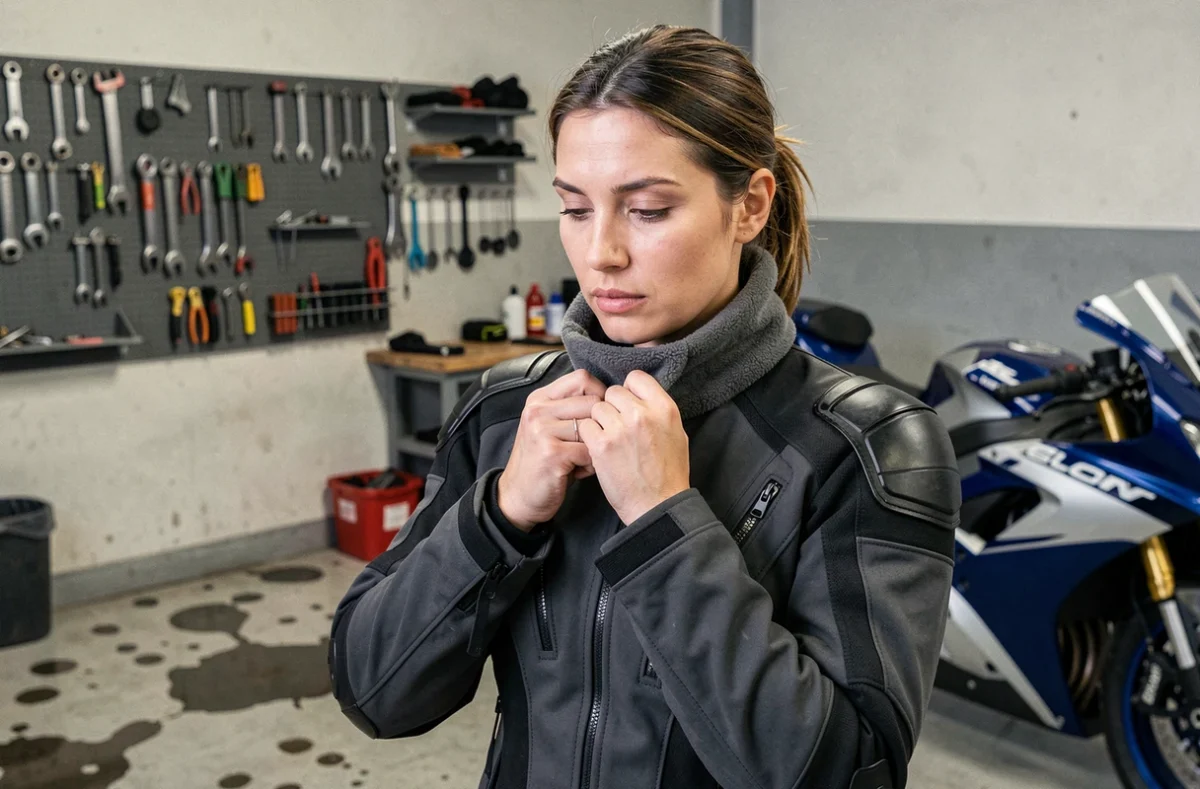
Tubular neck gaiter vs motorcycle scarf: materials and formats to consider
A classic scarf has no place on a motorcycle. The loose ends float in the wind, can get caught, and create a risk of strangulation or imbalance. The format to consider is the tubular neck gaiter without dangling ends.
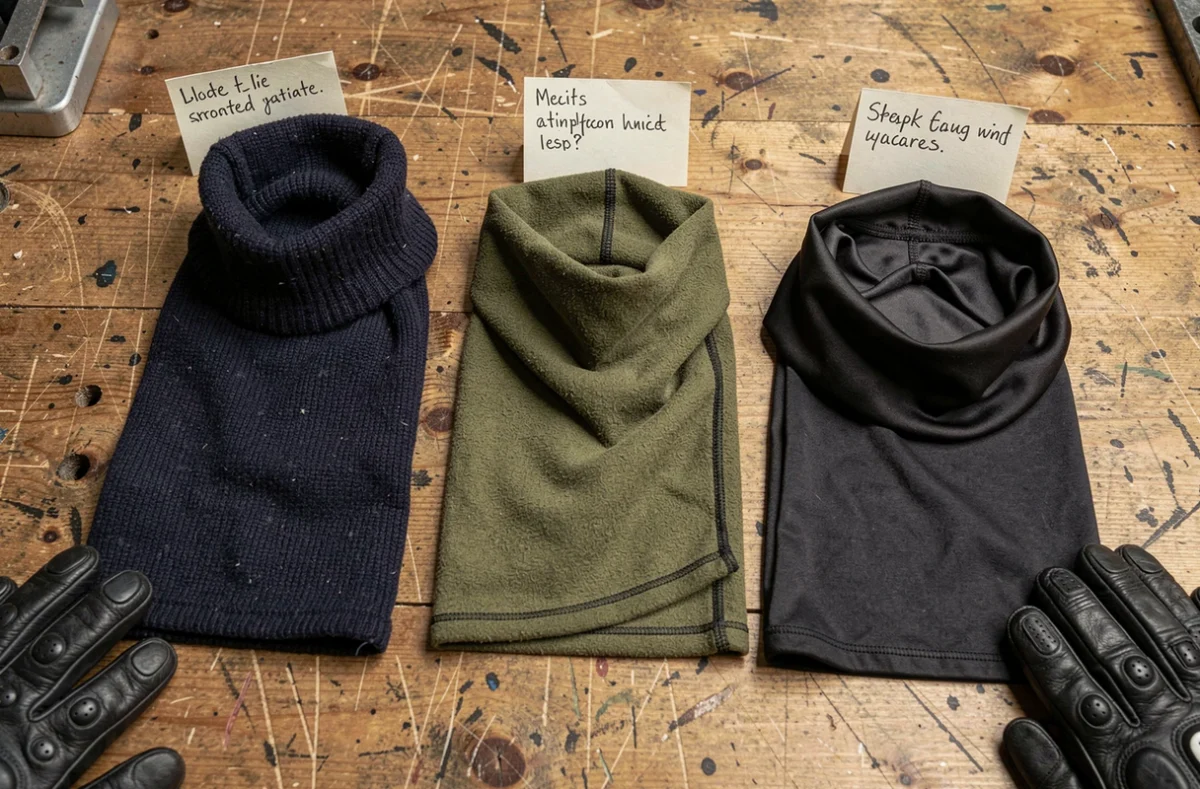
The materials are divided into three categories based on the season and use:
- Microfiber polyester tubes, thin and breathable, suitable for mid-season. They dry quickly and add almost no thickness under the helmet.
- Fleece or thin neoprene balaclavas designed for cold weather. They cover the skull and neck in one piece, eliminating the need for an additional beanie under the helmet.
- Models with evaporative effects for summer, which should be dampened before riding. Their effectiveness directly depends on the ambient humidity: in humid climates, evaporative cooling is very limited.
The choice of material should not be made solely based on the outside temperature. A neoprene neck gaiter blocks the wind but retains sweat. A merino tube better regulates body moisture but offers less protection against wind at high speeds. The decision depends on the type of ride: urban, road, or highway.
Heated neck gaiters: check the motorcycle’s electrical capacity
Heated accessories connected to the motorcycle’s battery are gaining ground. A heated neck gaiter significantly improves comfort in extreme cold, but its electrical supply must be balanced with other connected equipment (heated grips, heated jacket, GPS socket). The power available after the engine’s needs takes precedence over comfort. A low-power alternator on a small cylinder will not support three heated accessories simultaneously without risking discharge.
Motorcycle safety and neck protection: what regulations impose (and what they overlook)
French regulations require a certified helmet and CE-certified gloves. They say nothing about neck protection. This gap leaves the motorcyclist alone in their choice, with no reference standard to evaluate a neck gaiter or balaclava.
In the absence of specific certification, we observe that serious manufacturers indicate abrasion resistance and compatibility with full-face helmets. These two pieces of information, when available, are worth more than a self-proclaimed marketing label.
A point often overlooked: the neck is a vulnerable area in case of a low-speed fall. A neck gaiter does not replace a neck brace or a HANS device used in competition, but it at least prevents abrasions from asphalt burns if the jacket does not rise high enough.
Criteria for choosing a motorcycle neck gaiter based on the season
To avoid accumulating unnecessary accessories, the choice can be summarized in two pieces covering the entire year:
- A thin microfiber tube for the temperate period, which will also serve as protection against dust and insects under the helmet.
- A full fleece balaclava for winter, snug enough not to alter the fit of the helmet.
- A windproof model with a membrane for long highway trips in cold weather, where speed increases thermal loss at the neck.
Leather, sometimes offered on neck gaiters for aesthetic purposes, lacks flexibility and does not adapt well to the shape of the helmet. Technical textiles remain the best compromise between protection, comfort, and helmet compatibility.
The last criterion not to be overlooked is maintenance. A neck gaiter worn daily accumulates sweat and residues. Synthetic materials can be machine washed without deformation, while wool or neoprene requires hand washing. Over a full season, the practicality of washing weighs as much as the comfort of wearing.