A gypsy wedding in France is never just about a sum of money, let alone a bill. Here, every stacked bill, every shared dish, every burst of laughter around family tells a story of roots, pride, and collective allegiance. It’s not excess; it’s a response to the need to exist in the eyes of all. Money, among the gypsies, becomes the living memory of a community bound by its traditions and vows of mutual aid.
A gypsy wedding in France: traditions, family, and the spirit of celebration
Among the Manouches, Sintis, Kalderash, or Roms, marriage is never experienced in intimacy. The entire clan mobilizes: some travel across France, the elders oversee the transmission of gestures, and the children take care of logistics. Around long tables, each generation finds its place, memories are exchanged, and the family circle is reinforced, well beyond mere respect for customs.
Everyone invests in their own way. The elders bustle around the pots, the younger ones set up the celebration space, and sharing flows on all levels. Welcoming everyone with generosity is not a luxury: it’s a signature, the marker of the bond and loyalty that unites the group. Here, the ceremonial is anything but superficial. It is embodied in authenticity and the joy of receiving, generation after generation.
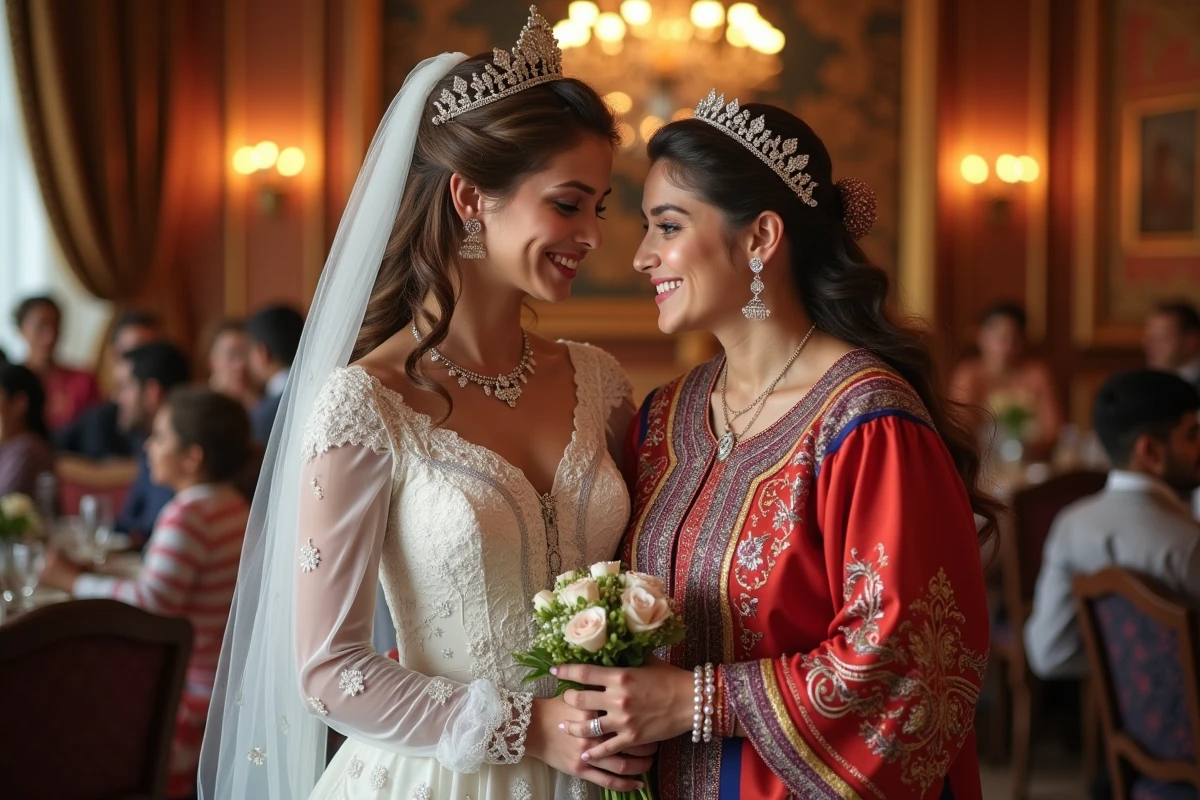
As soon as the music starts, the atmosphere shifts. We move from table to table, plates fill with homemade flavors, and the dresses enchant the eye. But the celebration always exceeds expectations: it’s primarily about the attachment to the group, the immense pleasure of giving and receiving. Reflecting on the cost of a gypsy wedding without understanding the strength of the family fabric is to overlook the emotional depth of each of these gatherings. The expense takes on a ritual dimension, consecrating the shared loyalty.
How much does a gypsy wedding really cost? An analysis of the budget and key expenses
In this community, pulling out all the stops is not a competition of show. Resources are allocated to honor the assembly and maintain the magic of the celebration, together. No one is left out: every guest matters, and generosity is a given.
To clarify the contours of the budget, here are the main categories of expenses for a gypsy wedding:
- Food and drinks, always at the center. Buffets spread out, desserts multiply, and conviviality invites itself even into the most mundane plates: it’s impossible to imagine the event without this abundance.
- The venue, designed as a setting for the community. Whether it’s a large marquee, a municipal hall, or a prepared area in a private circle, the space must allow everyone to gather without constraints.
- Outfits and adornments mark an essential part of the celebration. Dazzling dresses, carefully chosen jewelry: every detail matters and honors tradition.
- Musical entertainment never lets the celebration lose momentum. Musicians, singers, dancers take turns to anchor the event in joy until the end of the night.
- Gifts and presents circulate naturally: envelopes, rare coins, small family treasures invest the celebration with an extra soul.
All these expenses tell one and the same story: that of a community celebrating the pact of hospitality, the vigor of family memory, without artifice. Organizing here means preserving unwavering hospitality.
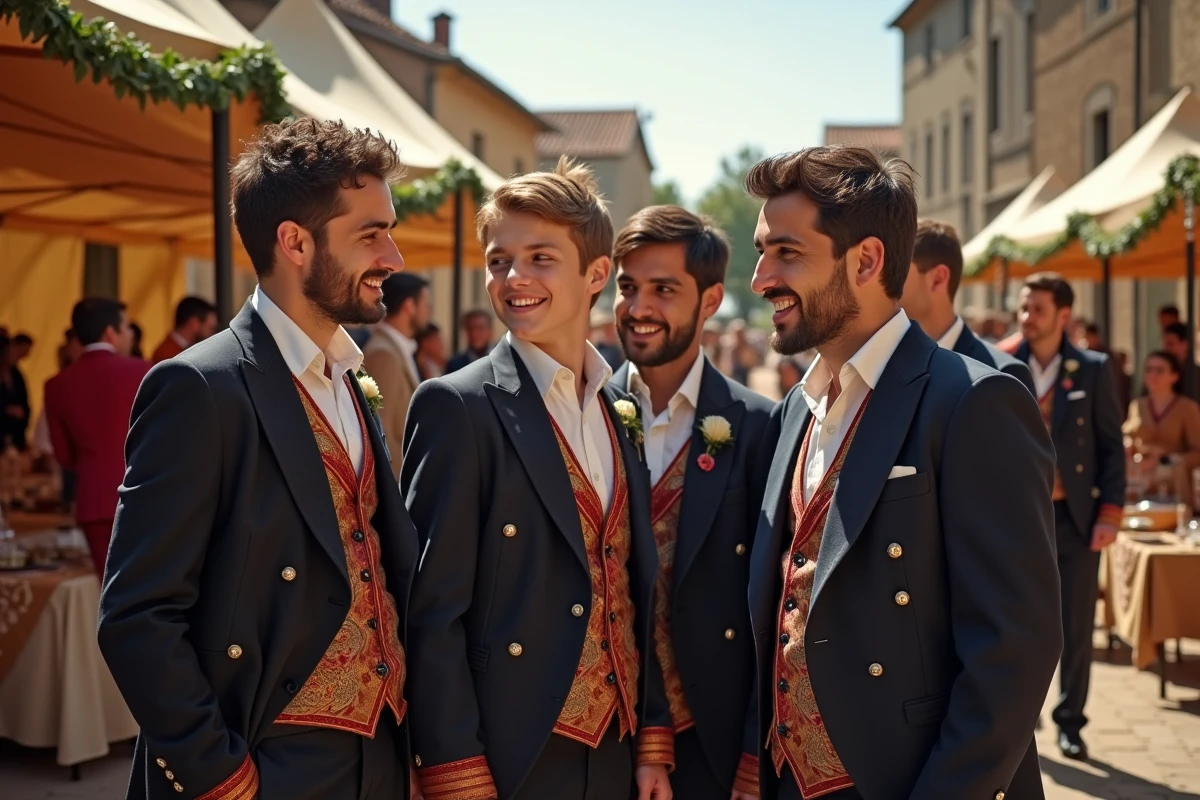
From engagement to the big day: key steps and moments of a gypsy wedding
The adventure almost always begins with the “Plotchka,” the time when families come together to formalize the engagement. Exchanges of jewelry, gifts, promises articulated aloud: from this moment, the meeting takes on a collectively recognized dimension.
Next comes the ceremony known as the “Pañuelo,” conducted by the aroutadora. Regardless of the variant according to lineages, this step evokes emotion and leaves a lasting mark among the kin. It draws a symbolic boundary, full of intensity.
The visit to the town hall often comes later, sometimes after the grand celebration. But in the community, the essence is already established in the verbal agreement, in front of witnesses, around a shared meal: this is where the marriage finds its true weight.
In the end, there are no strangers. Each guest leaves carrying a collective story that adds to the clan’s history, marked by the quiet power of hospitality.
When morning comes, as the tablecloths wrinkle and laughter lingers, there remains tangible proof of unwavering loyalty. The gypsy wedding adheres to no mathematical rules: it pulses, it inhabits, it turns the order of things upside down to remind us that sometimes, celebrating means giving without restraint and writing another chapter in a shared story.