
At 23 degrees, the thermometer displays a misleading temperature. You think summer, you go out in a t-shirt, and you end up shivering in an air-conditioned restaurant or on a terrace after 8 PM. Knowing how to dress at 23 degrees is first about understanding that this temperature sits right on a ridge line between comfort and discomfort.
Why 23 degrees is not a summer temperature
You may have noticed that at 23 degrees, some people wear shorts while others stick to jeans? This discrepancy can be explained by a factor that the weather does not show: the gap between perceived temperature and displayed temperature. Wind, humidity, shade, and indoor air conditioning radically change the actual comfort level.
In practice, a day at 23 degrees often presents a difference of several degrees between morning and afternoon. The midday sun can create a sensation close to 28 degrees, while the evening chill brings the perception below 20 degrees. The real issue is not choosing a warm or light outfit, but planning a versatile outfit that adapts to these variations.
To delve deeper into this question, a detailed guide on how to dress at 23 degrees also explores the specific case of shorts and exposed legs at this temperature.
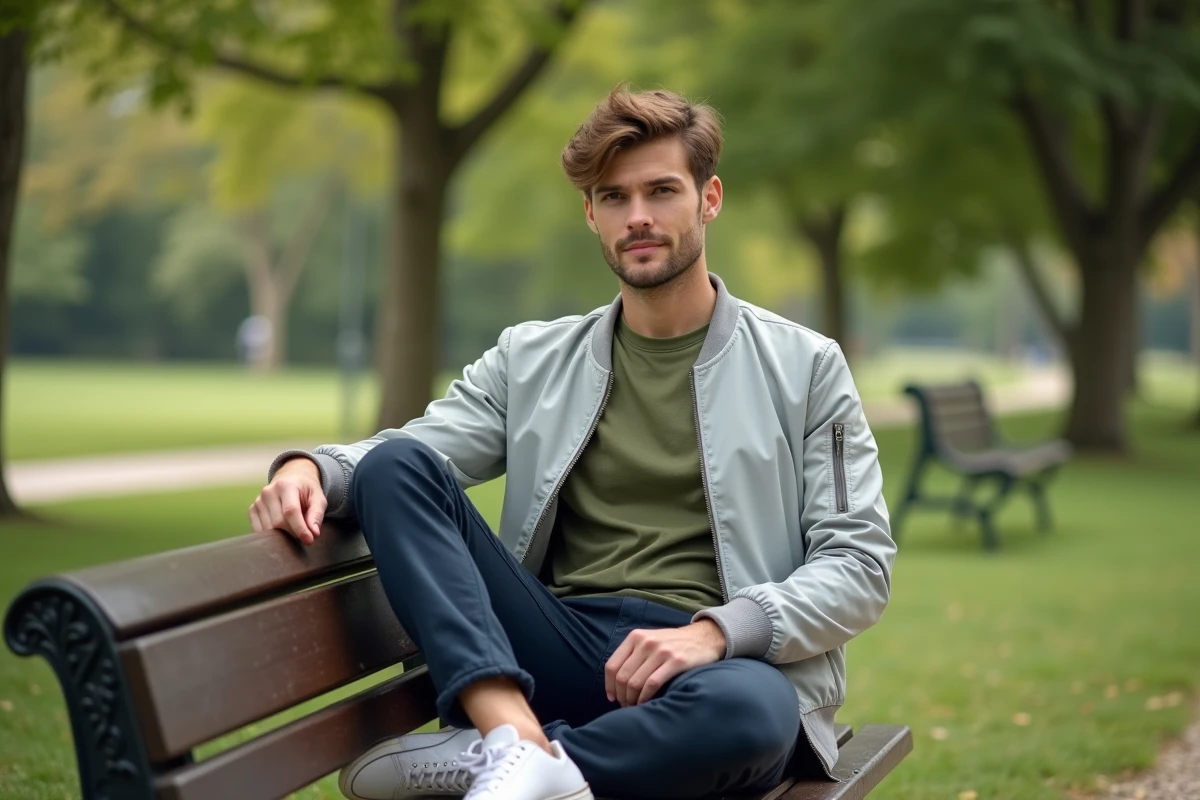
Clothing color and comfort at 23 degrees: an underestimated effect
At 23 degrees in full sun, the choice of color for your top makes all the difference. Under direct exposure, a dark fabric can reach a surface temperature ten to fifteen degrees higher than a light garment. The result: a tight black t-shirt at 23 degrees in the sun feels the same as a white t-shirt at over 30 degrees.
This is not a matter of fashion taste but of simple physics. Black absorbs radiation, while white reflects it. At 23 degrees, this difference is even more noticeable as the air temperature remains moderate: the fabric becomes the main source of heat on the skin, not the ambient air.
Two practical reflexes to take this into account:
- Opt for light or medium shades (beige, sky blue, off-white) for your upper body if you spend time outdoors in the sun.
- Keep dark colors for lower pieces (pants, skirts) or for evening outings when the sun is no longer shining.
- If you insist on wearing black, choose a loose fit that allows air to circulate between the fabric and the skin, rather than a fitted t-shirt.
Materials to choose for a comfortable outfit at 23 degrees
Cotton and linen remain the two most recommended materials for this temperature range, and for good reason: they absorb sweat and dry without sticking. A lightweight cotton t-shirt or a short-sleeved linen shirt is sufficient for the upper part of the outfit.
In recent years, so-called thermoregulating materials (fine merino wool blends, Tencel or lyocell fibers) have been gaining ground in everyday fashion. Their advantage over classic cotton is that they regulate humidity better when alternating between air-conditioned interiors and outdoors. If you spend your day between an office at 20 degrees and outings at 23 degrees outside, this type of fabric limits the feeling of dampness.
However, avoid pure polyester for the top. At 23 degrees, sweating remains light, but enough to make a synthetic fabric uncomfortable in a few hours.

Outfit at 23 degrees: the removable layer as the central piece
The real trick at this temperature is not the choice of t-shirt or pants. It’s the light removable layer that you carry with you. A thin cardigan, a cotton overshirt, or an unlined blazer can transform a summer outfit into a mid-season outfit in thirty seconds.
Why this choice? Because at 23 degrees, you will be taking off and putting on this layer several times throughout the day. It must therefore meet three criteria:
- Fold easily in a bag without wrinkling (linen wrinkles, blended cotton or jersey resist better).
- Cover the arms down to the wrists for air-conditioned spaces or cool evenings.
- Remain thin enough not to make you hot when worn in the afternoon sun.
The lightweight unlined blazer ticks all three boxes for a professional context. For a casual day, a chambray overshirt or a fine knit vest does the same job.
Shoes and accessories suitable for 23 degrees
The feet pose a specific dilemma. At 23 degrees, open sandals remain comfortable outdoors but become cold indoors in air conditioning. Canvas or breathable mesh sneakers represent the best compromise: they ventilate the foot without exposing it to cold drafts.
On the accessory side, a bag large enough to hold your folded removable layer avoids carrying it on your shoulders when it gets too warm. Sunglasses remain useful even at this temperature, as sunlight has no direct relation to heat.
At 23 degrees, the ideal outfit is not one that dresses you for a single situation. It is one that allows you to move from sun to shade, from the office to the terrace, without ever having to go home to change.